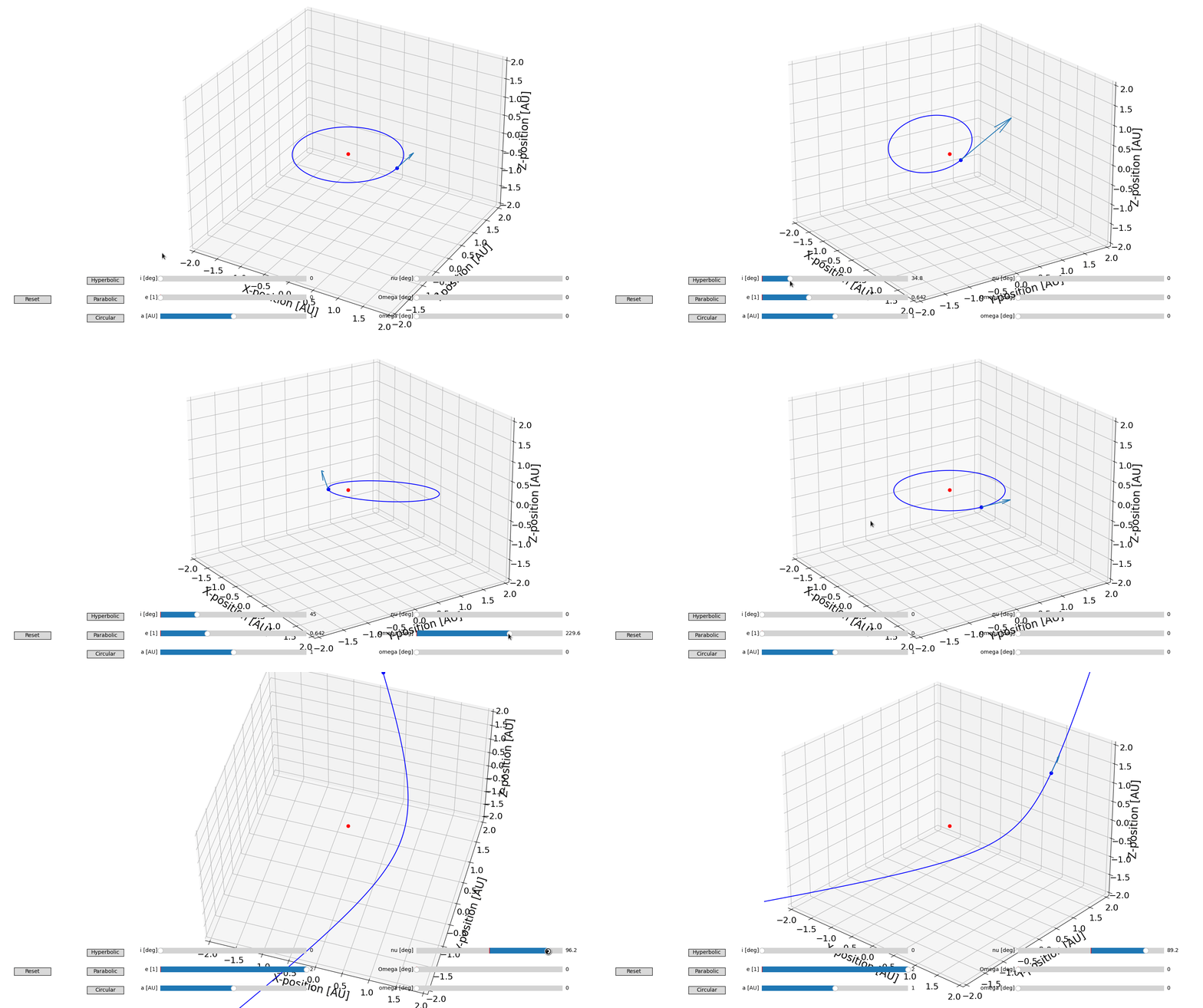
Every celestial object dancing through space follows an orbital path that can be described mathematically, but converting between different coordinate systems has traditionally been a computational headache for astronomers and mission planners. Whether you’re tracking a near-Earth asteroid, planning a spacecraft trajectory, or analyzing exoplanet observations, you need rock-solid coordinate transformations that handle the mathematical edge cases that make orbits fascinating—and frustrating.
PyOrb delivers exactly that: seamless conversion between Cartesian coordinates (x, y, z positions and velocities) and Keplerian orbital elements (semi-major axis, eccentricity, inclination, and the angular parameters that define an orbit’s orientation). The library excels at handling special cases that often break other implementations—perfectly circular orbits, planar trajectories, and even hyperbolic escape trajectories like those of interstellar visitors. Its vectorized operations mean you can process thousands of orbital calculations simultaneously, while the convenient Orbit class lets you tweak parameters and instantly see how they affect the resulting trajectory.
From asteroid survey teams processing observational data to spacecraft mission designers optimizing transfer orbits, PyOrb provides the computational foundation for understanding motion in space. With upcoming C-implementation performance boosts and file I/O capabilities on the roadmap, this lightweight package is positioning itself as an essential tool for anyone working at the intersection of astronomy and computation.
⭐ Stars: 12
💻 Language: Python
🔗 Repository: danielk333/pyorb