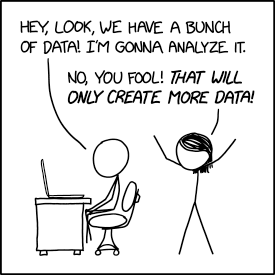
Modern astronomy is experiencing a data revolution. From LIGO’s gravitational wave detections to the Gaia spacecraft’s billion-star catalog, today’s cosmic discoveries depend as much on sophisticated statistical analysis as they do on powerful telescopes. This comprehensive course repository bridges that gap, teaching the machine learning and statistical inference techniques that transform raw astronomical observations into groundbreaking science.
Built for the MSc Astrophysics program at University of Milan-Bicocca, this hands-on curriculum covers everything from fundamental probability theory to advanced Bayesian inference and MCMC sampling. Students work through 13+ interactive Jupyter notebooks, progressing from basic statistical concepts to cutting-edge techniques like nested sampling and Gaussian mixture models. The course emphasizes practical implementation with Python tools like emcee, PyMC3, and dynesty, using real astrophysical datasets including gravitational wave signals and stellar observations.
Whether you’re an astronomy graduate student tackling your thesis data or a developer curious about the statistical methods behind space science headlines, this repository offers a proven pathway to mastering astrostatistics. The combination of rigorous mathematical foundations with executable code examples makes complex topics accessible, preparing the next generation of researchers to extract cosmic insights from the universe’s vast datasets.
⭐ Stars: 8
💻 Language: Jupyter Notebook
🔗 Repository: dgerosa/astrostatistics_bicocca_2026