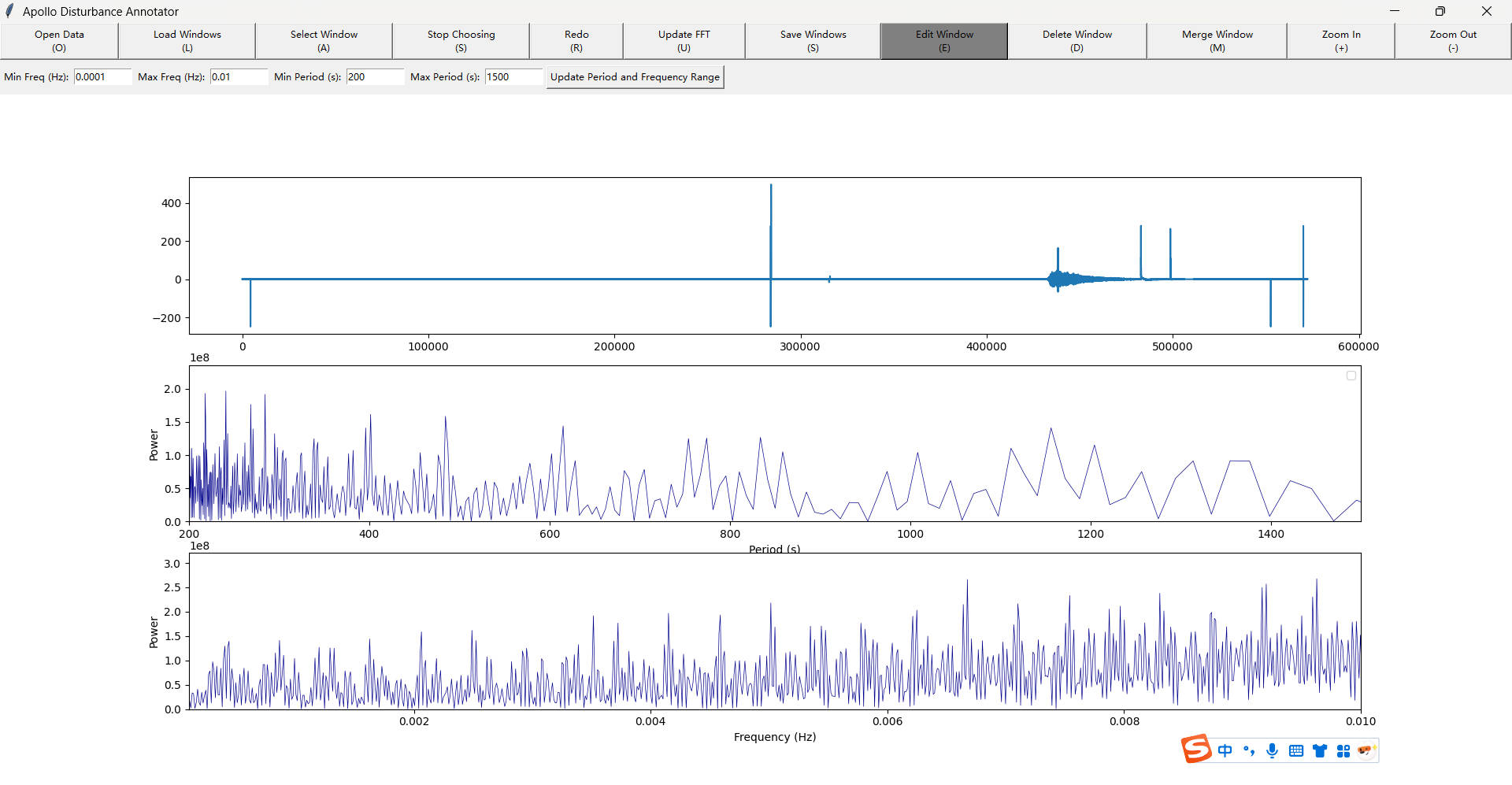
Half a century after the Apollo missions planted seismometers on the lunar surface, their treasure trove of moonquake data continues to reveal the Moon’s hidden dynamics. From meteorite impacts to deep lunar tremors caused by Earth’s gravitational pull, these seismic signatures hold keys to understanding our celestial companion’s internal structure and ongoing geological activity.
Apollo Annotator transforms the painstaking process of analyzing recently re-archived Apollo seismic data from MiniSEED format into an efficient, user-friendly workflow. The toolkit combines an intuitive GUI for manual annotation—complete with FFT visualization and window management—with TensorFlow-powered automated detection algorithms that can identify strong seismic disturbances across vast datasets. Whether you’re meticulously cataloging individual moonquakes or processing years of continuous data, the system adapts to both detailed research and large-scale analysis needs.
This dual approach makes lunar seismology accessible to both seasoned planetary scientists and the next generation of space researchers. As we prepare for humanity’s return to the Moon, tools like this ensure that decades of invaluable Apollo data remain scientifically relevant, providing baseline knowledge for future lunar missions and seismic monitoring networks.
⭐ Stars: 5
💻 Language: Jupyter Notebook
🔗 Repository: MrXiaoXiao/Apollo_Disturbance_Detection