The universe contains billions of exoplanets, but finding them requires sifting through massive datasets of stellar photometry—tiny dips in starlight that might signal a world passing in front of its host star. NASA’s Kepler and TESS missions have generated petabytes of this data, creating an astronomical needle-in-haystack problem that demands automated solutions.
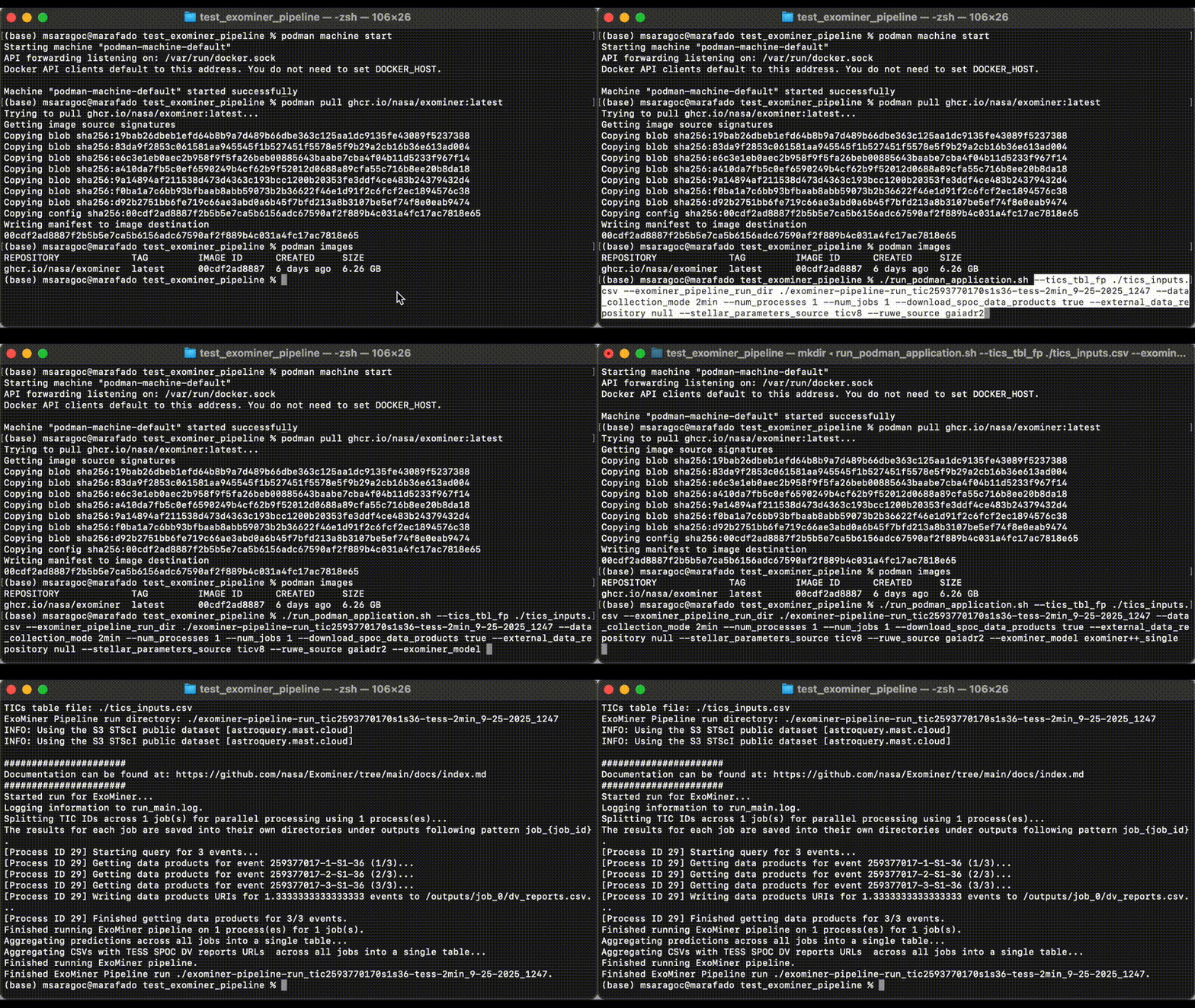
ExoMiner deploys convolutional neural networks to classify Threshold Crossing Events (TCEs) from both Kepler and TESS photometry, distinguishing genuine planetary transits from false positives caused by stellar variability, instrumental artifacts, and eclipsing binaries. The tool provides a complete pipeline from TIC IDs to prediction scores, containerized with Podman for seamless deployment. Its neural networks have been trained on validated exoplanet discoveries and can process both 2-minute cadence and Full Frame Image data from TESS.
This isn’t just another classification tool—ExoMiner is actively contributing to exoplanet validation and creating vetted catalogs for the astronomical community. By automating the initial vetting process, it frees up expert astronomers to focus on the most promising candidates while ensuring no potential Earth-sized worlds slip through the cracks of manual analysis.
⭐ Stars: 48
💻 Language: Python
🔗 Repository: nasa/ExoMiner